
Monday morning.
Three spanish students looking forward to begin their adventure.
It's February 22nd and they are above to flly with me and Sergio, their Geography teacher from Madrid to Athens.
In Athens they will take another flight to Heraklion, Crete.
There, a great experience is waiting for them...

In Heraklion, introductions, kisses and three hours by bus, with the rest of the participants, to arrive to Sitia.
Tuesday morning, after a good rest in Sitia Beach Hotel, Emmanouil picked us up to Palekastro Primary School.


There, with the expectation of all of us, the activities presentations began...

Polish students talking about the work done in their school for this meeting.

Italian students presented two interesting activities.

Greek students during their morning break at school.

Nice classroom in Palekastro Primary School.

Verginia designed very interesting activities involving all participants.


Greek presentation.

We had lunch in a nice restaurant in Palekastro, with typical food.

After lunch, we visited the Folklore Museum of Palekastro, where we were offered coffee an local sweets.


After that, we visited the Vay Palm Beach, and went for a walk around the area.


Wednesday morning, Emmanouil came to the Hotel and picked us up to the Information Center of Sitia Natural Park.


Evangelos showed us a beautiful video about the Park.

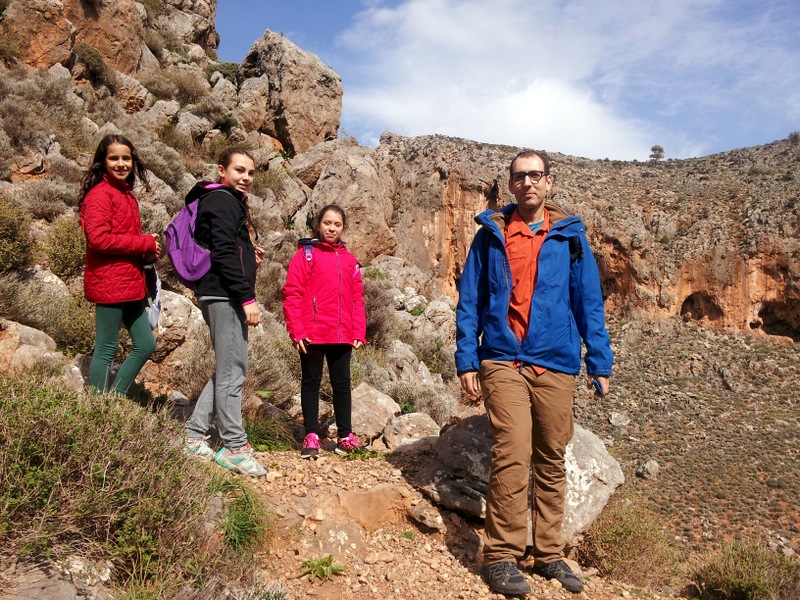
Then, he accompained us trough the Dead's Canyon of Zakros.


Carnivore plants.


At the end of the Canyon we found the Arqueological Site of Zakros.

Of course, we visited it.

Our walk ended in Zakros beach.
Then we went to Zakros village and had lunch in a nice restaurant with typical and really rich greek food

After lunch, we visited the Cavo Sidero Cape in Zakros.

And the Monastery of Toplou.

We returned to Sitia very tired but happy of having seen such a lot of nice places.

Thursday morning we took the bus for going to Heraklion.
First, we visited the Cretan Aquarium.


And the Museum of Natural History.


In the earthquake simulator!!

We had lunch in a restaurant in Heraklion, and after that went to the hotel.

We had free time in Heraklion till next day.

And, finally, and sadly, the departure day arrived...
We were all very happy and with our hearts full of beautiful experiences...
See you in Bulgaria, my friends!!


